
Godzilla
A Warning That Still Echoes
Horror/Sci-Fi ‧ 96 minutes ‧ Not Rated ‧ 1954 ‧ 5 min read
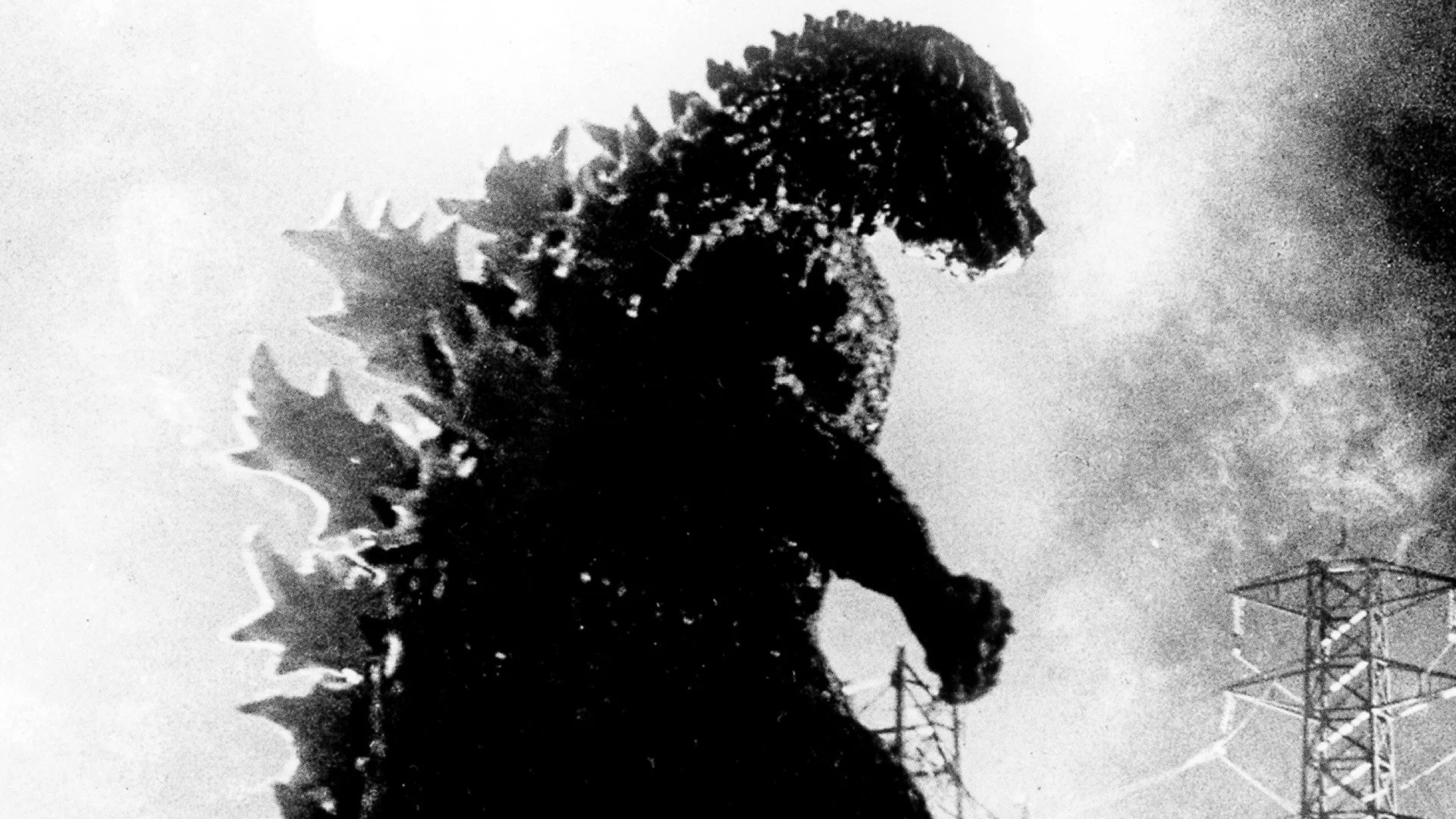
"If nuclear testing continues, another Godzilla may appear."
The most important thing to know going into Godzilla (1954) is that the monster is not really the point. There is less Godzilla on screen than almost any film in the franchise that followed, and that is the right call. Ishiro Honda directs a film that is fundamentally about people deciding what they owe each other after something unthinkable has happened. Honda served in the Japanese military and witnessed the aftermath of Hiroshima firsthand. That is not background information. That is the film. The monster is the unthinkable thing. The film is about what comes after you acknowledge it exists.
The effects hold up considerably better than you would expect for 1954. Suit work, miniatures, and carefully composed optical shots by cinematographer Masao Tamai give the destruction genuine physical weight. Ships buckle. Buildings tear apart. The sequence where Godzilla moves through a burning Tokyo at night, lit in harsh shadow, is shot to resemble newsreel footage from the Pacific War. That visual connection is deliberate. The camera stays wide enough that you can read scale and damage without losing your orientation. Akira Ifukube's score pounds through every sequence with the feeling of something that cannot be stopped by reasoning with it.
What surprised me most on first watch was how much of the film takes place in meeting rooms, hospitals, and labs. Officials argue about what to tell the public. Scientists weigh what they know against what they can prove. Families search for people who are not coming back. Honda gives these scenes real time, and that patience is exactly what makes the destruction feel like consequence rather than spectacle. When it finally arrives, you understand what it is costing.
The human story runs through a love triangle that the film treats with as much care as the monster plot. Emiko is caught between a childhood engagement to Serizawa and her feelings for Ogata, and that conflict is not decoration. It is load-bearing. The reason she eventually betrays Serizawa's confidence is rooted in that personal history, and the film earns the weight of that choice. Momoko Kochi plays Emiko with a quiet desperation that keeps the emotional throughline taut while everything around her is exploding.
Dr. Serizawa is the film's moral center. His problem, whether to use a discovery that could stop the threat but open a door to something far worse, is handled with genuine weight rather than as a plot device. Akihiko Hirata plays him with a haunted restraint that makes every scene feel like it matters. The fact that the most compelling question in a monster film is a scientist's ethical dilemma is a serious achievement, and the film earns it entirely on its own terms.
The ending is slightly rushed, and the final emotional beat would land harder with one more quiet moment before the credits. It is a small complaint about a film that gets almost everything else right. Godzilla gets a 4 out of 5. The American version added Raymond Burr and removed most of the subtext. Watch the Japanese cut. It is a completely different film, and the better one.
(Seventy years of franchise films and nothing has matched what the original was actually saying.)