
Casablanca
A Small Room Where Everything Happens
Romance/Drama ‧ 102 minutes ‧ PG ‧ 1942 ‧ 5 min read
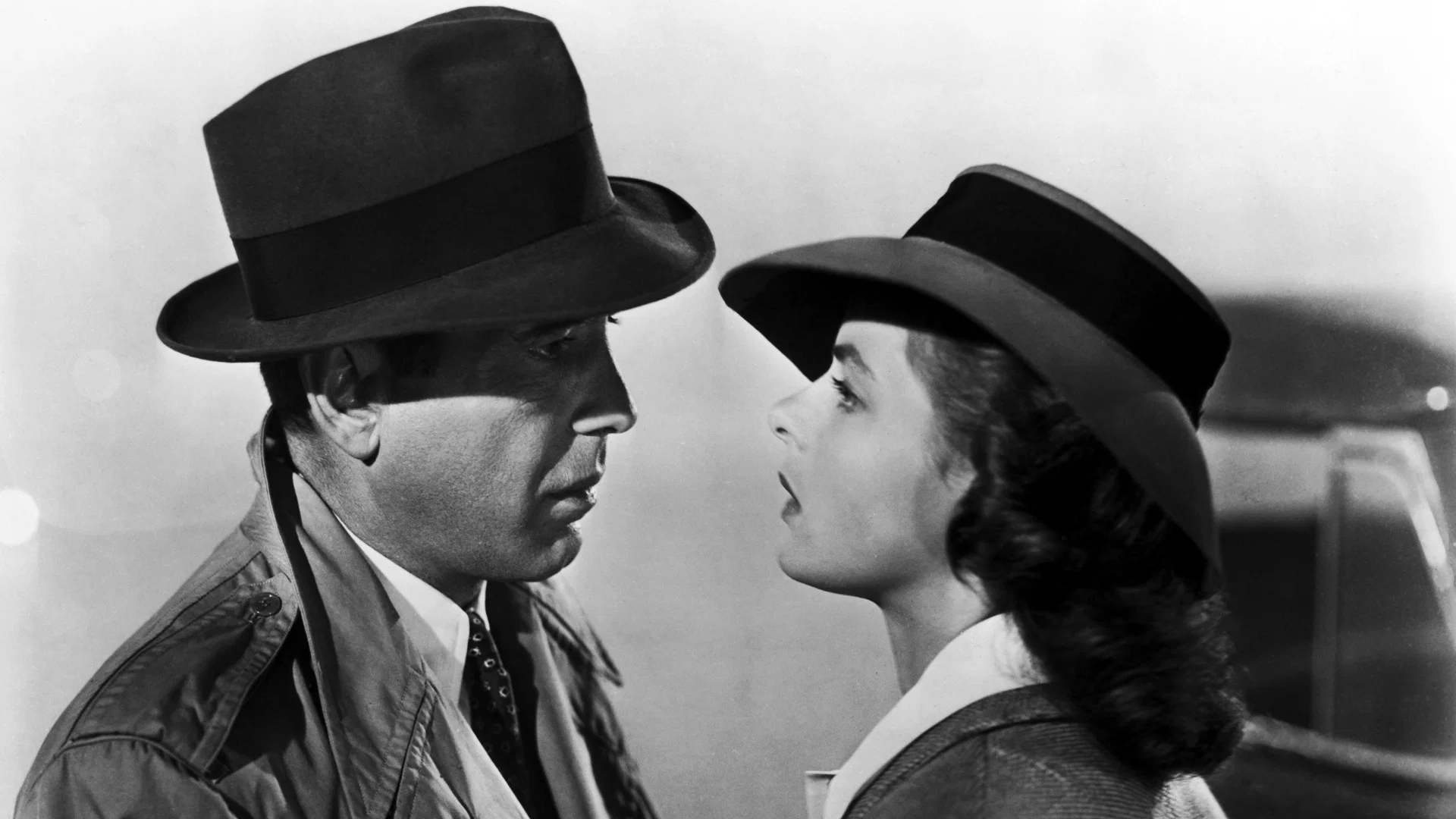
"Here's looking at you, kid."
Casablanca gets harder to write about the more you watch it, because the closer you look the more there is. Michael Curtiz directs with the kind of precision that makes the film feel effortless, which is the best kind of direction. The camera turns a nightclub into a moral crossroads. Every person who walks through Rick's door is carrying a version of the same question the film is asking: what do you owe the world when the world has already asked too much of you? Arthur Edeson's black and white cinematography does quiet work throughout. The shadows carry a mood of their own, and the fog at the airfield in the final scene is one of the most purposefully staged images in classical Hollywood.
Humphrey Bogart's Rick is the reason it all works. He is bitter and kind in the same scene, sometimes in the same line, and Bogart plays that tension without letting it tip into sentiment or self-pity. The "I'm not fighting for anyone, I'm the only cause I believe in" routine is a performance, and the film knows that. The people around Rick know it too. When the performance finally breaks, it breaks quietly, and the restraint is what makes the moments land rather than announce themselves.
Claude Rains as Louis Renault is the film's secret weapon. He is a collaborator, a cynic, a coward, and genuinely funny in ways that should not be possible given what his character represents. Rains plays the moral flexibility so lightly that Louis becomes the most watchable person in any scene he is in, and the film is smart enough to use that charm as its own kind of indictment. His friendship with Rick is the real relationship at the center of the story, which is not the romance most people think they are watching.
The supporting world matters too. Sam, played by Dooley Wilson, is more than atmospheric. His loyalty to Rick is never explained and never needs to be. The café itself is a holding pen for everyone the war has displaced: refugees, resistance fighters, opportunists, officers. Curtiz keeps the background alive enough that the room always feels like a real place rather than a set. Max Steiner's score finds exactly the right register between romantic and mournful and stays there.
The writing is extraordinary in a way that feels almost accidental. The famous lines land because the characters earn them, not because the screenplay was building toward quotable moments. The Marseillaise scene is the best example of this. It works not because it is well-staged, though it is, but because the film has spent enough time with these people that their desperation reads as real. You understand what it costs them to stand up. The scene does not explain itself. It just happens, and you feel it.
Ingrid Bergman rarely gets enough credit in conversations about this film, which tend to focus on Bogart. Ilsa arrives with a past and a plan, and Bergman plays the impossible position of someone who has already made her choice and is trying to live with it. Her scenes with Bogart work because she is not simply the love interest. She is the argument. Her presence is what forces Rick to decide who he actually is.
The ending is the most honest thing about the film. Casablanca does not believe love conquers much. It believes love asks something of you, and the right people pay what is asked. The goodbye on the runway is tender and hard in the same breath, and the famous closing line works because it is not a declaration. It is a farewell that has already been decided. Casablanca gets a 5 out of 5. Eighty years have not touched it.
(Louis was absolutely going to become a problem again three weeks later.)