
The Dark Knight
The Best Film That Almost Forgot It Was a Batman Movie
Action/Crime ‧ 152 minutes ‧ PG-13 ‧ 2008 ‧ 7 min read
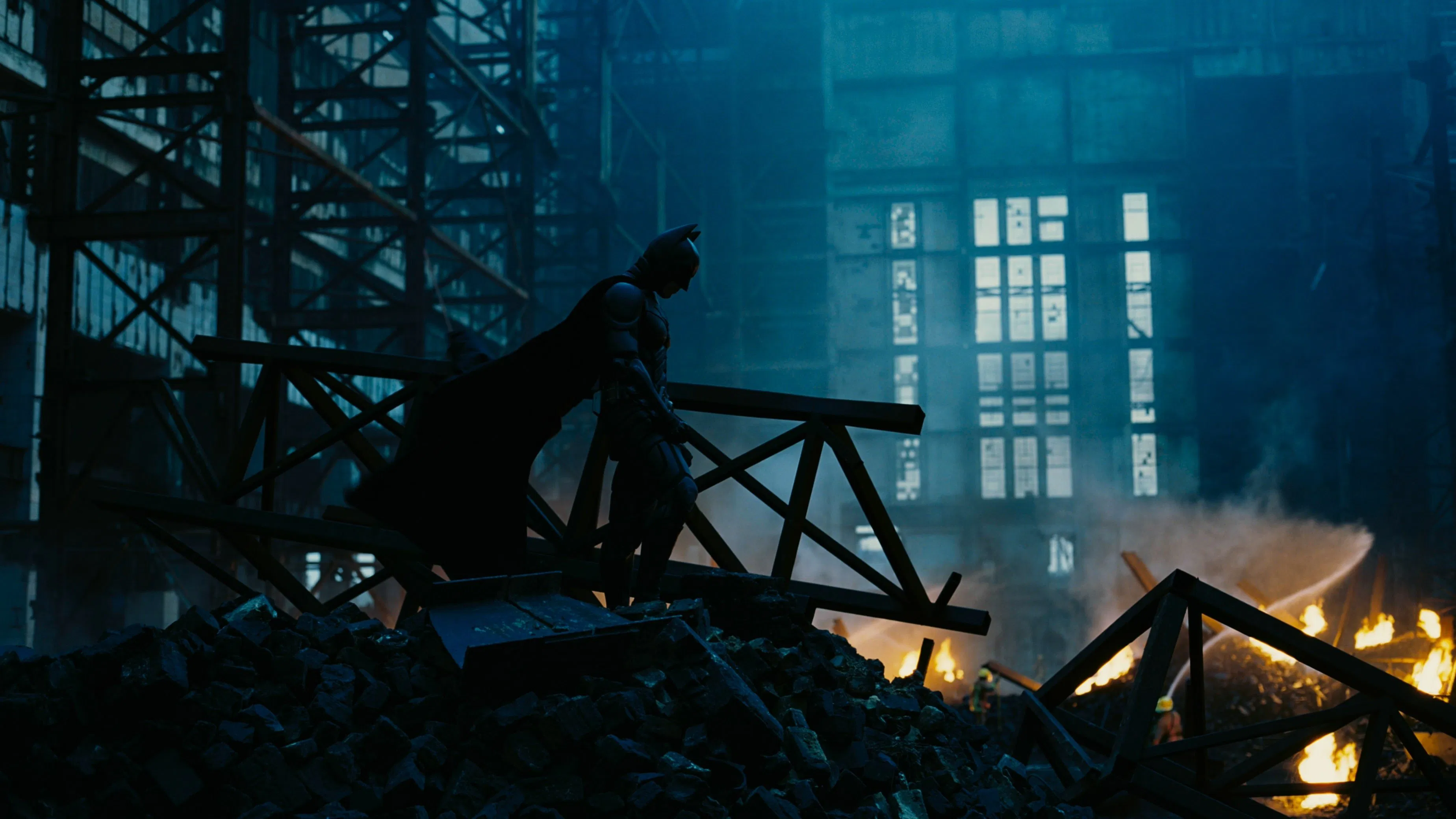
"You either die a hero, or you live long enough to see yourself become the villain."
The Dark Knight is not really a Batman movie. That is not a criticism. It is the first thing worth saying about why the film works the way it does. Nolan is not interested in Bruce Wayne here. He is interested in what happens to a city when chaos is introduced as a philosophical argument, and Batman is less a protagonist than a pressure point the story builds around. The Joker drives everything. Batman responds. For a film with his name in the title, that is a striking choice, and it pays off almost completely.
Heath Ledger's Joker is as good as everyone says, and that is worth stating plainly because the reputation has gotten so large it occasionally obscures the actual performance. What Ledger does is play a character with no coherent backstory and no stable motivation. The Joker changes his origin story twice in the film because the origin does not matter. What matters is the principle he represents, and Ledger commits to it so completely that every scene he is in feels genuinely unpredictable. The interrogation scene. The pencil. The hospital. None of it feels like acting. It feels like a problem the film cannot solve, which is the whole point.
The film's biggest weakness is Harvey Dent. Not the character himself. Aaron Eckhart is strong in the role and the first two acts give him real weight as Gotham's legitimate hope for justice. The problem is Two-Face. He arrives in the third act with roughly thirty minutes left and is gone before his arc can breathe. In a different version of this story, Harvey Dent's fall is the spine. Here it feels like a subplot the runtime cannot fully support. The transformation is rushed, the villainy is underwritten, and the film has to tell you how significant his fall is rather than letting you feel it. For a movie that earns almost everything else, that stands out.
Nolan's Gotham is also worth addressing. This is Chicago. It is a clean, modern, functional American city with good architecture and normal lighting. The gothic rot that makes Gotham feel like a city that deserves its criminals, the sense that it was always one bad night away from this, is mostly absent. That is a deliberate choice in service of the film's realist tone, and it works for what Nolan is making. But if you grew up with the comics or even Tim Burton's version of the city, there is something missing. Gotham should feel like a character. Here it mostly feels like a backdrop.
What the film gets completely right is the ending. Batman loses. He covers up what Harvey Dent became, takes the blame for murders he did not commit, and goes into hiding as a fugitive so Gotham can keep its symbol. It is a genuinely bleak conclusion and Nolan commits to it without softening it. Making the hero lose is hard. Making it feel earned is harder. The Dark Knight manages both, and the final scene between Batman and Gordon is one of the best closing sequences in the genre.
This is also the film that changed what superhero movies were allowed to be, and that legacy is complicated. Before The Dark Knight, superhero films were spectacle with varying degrees of quality. After it, they were supposed to be serious. The problem is that the lesson most studios took was that dark and gritty equals depth, which produced years of films that confused grimness with substance. Man of Steel. Batman v Superman. The long shadow of a film that understood its own tone getting copied by films that only understood the surface of it. The Dark Knight set a trend that made a lot of superhero movies worse. The film itself is not responsible for that. It just turned out to be very easy to copy badly.
The Dark Knight gets a 4.5 out of 5. It is not a perfect Batman film. Gotham is bland, Two-Face is shortchanged, and Bruce Wayne is the least interesting person in his own movie. But it is a near-perfect crime thriller built around one of the best villain performances ever put on film, and it ends by doing something most superhero films are still too cautious to attempt. It made the hero lose and meant it. That counts for a lot.
(Gordon probably had to do so much paperwork after this.)