
Fight Club
A Breakup Letter to Numbness
Drama/Thriller ‧ 139 minutes ‧ R ‧ 1999 ‧ 6 min read
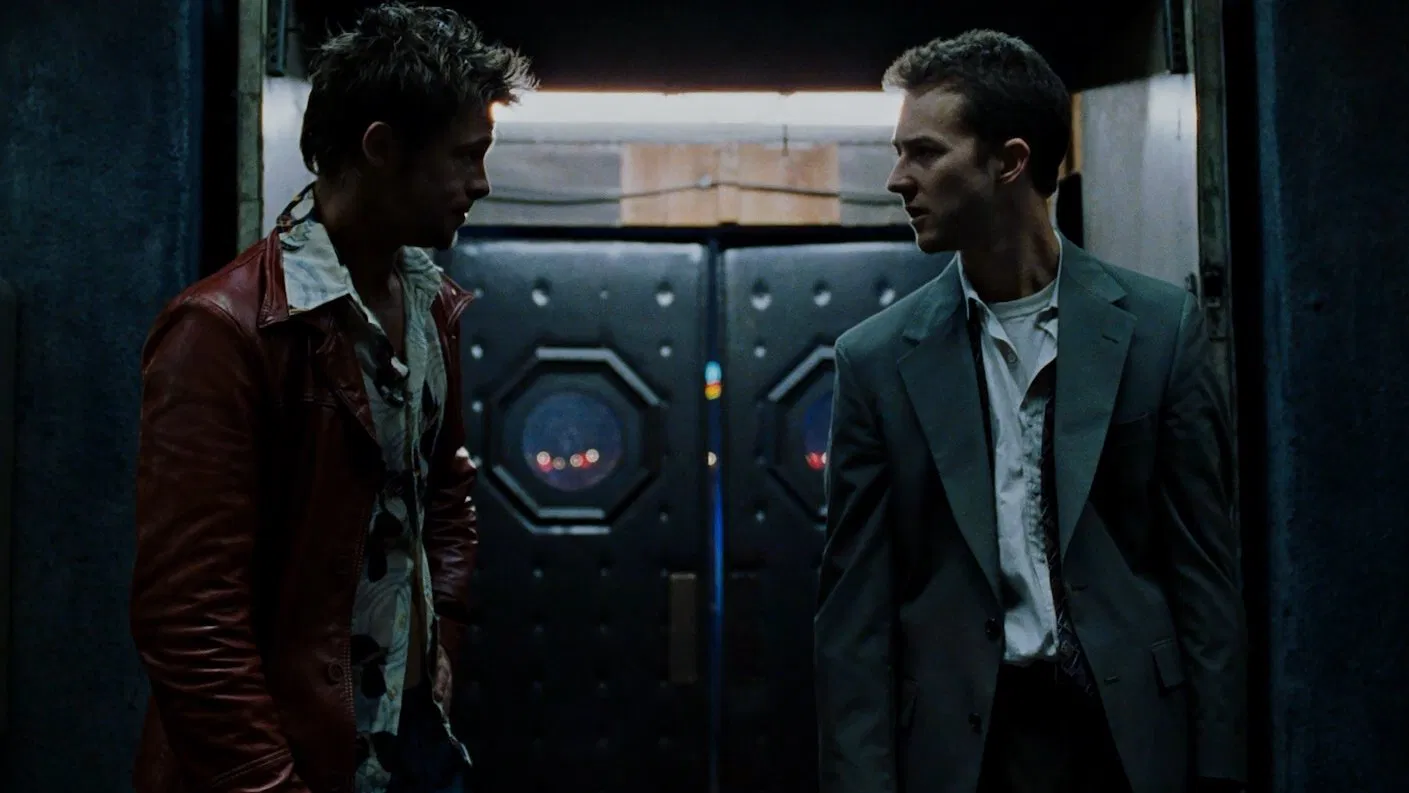
"The first rule of Fight Club is: you do not talk about Fight Club."
Fight Club is one of those films that got misread so thoroughly on release that the misreading became part of its legacy. David Fincher directs, with Brad Pitt, Edward Norton, and Helena Bonham Carter leading. The film is not a celebration of what Tyler Durden represents. It is a diagnosis. The difference matters enormously, and the film is structured specifically to make you live through the mistake before it shows you what the mistake cost.
The narrator is the argument. He is not a hero and not quite a victim, because the film is too honest for that. He is a man whose loneliness and consumer-assembled identity make him vulnerable to exactly the kind of performance Tyler offers. Norton plays this with something close to genuine passivity, which is precisely right. He is not dragged into anything. He walks in willingly and convinces himself he has no choice. The film opens with him at cancer support groups he does not belong to, crying with strangers because it is the only place he can feel anything. It is the funniest and most bleak thing in the first act, and Fincher plays it completely straight.
Helena Bonham Carter's Marla Singer is the character most people undervalue on a first watch. She is not a love interest in any useful sense. She is the thing the narrator cannot dismiss, the person in the room who is doing exactly what he is doing but refuses to pretend otherwise. Where the narrator performs sincerity and Tyler performs freedom, Marla performs nothing. That honesty is what makes her threatening to both of them, and Bonham Carter plays the role with a chaotic, self-destructive energy that is entirely its own thing.
Fincher's direction is where the film lives. This is not a neutral camera. Cinematographer Jeff Cronenweth shoots the city in sickly fluorescent light that makes you feel the quality of the life being described before a word of dialogue explains it. The editing is choppy and precise at the same time, mirroring a mind that keeps finding gaps in its own memory. The Dust Brothers score runs underneath everything like a low-grade electrical hum, unsettling rather than exciting. The violence is deliberately unpleasant, which is the point. Fights in this film hurt and look stupid. Anyone walking away thinking it looked cool missed it.
The escalation from fight club to Project Mayhem is where the film earns its thesis. The whole arc, men who feel powerless inventing pain as proof they exist and then channeling that into organized destruction, is not played as cool or aspirational. It is played as exactly what it is: a cult forming in real time, and the narrator too far in to name it. By the time the bombs are on the table, the film has traced every step of how you get from an IKEA catalog to that room without ever taking a shortcut.
The twist holds up on repeated viewing because it was never a gimmick. The information is in the film from the beginning. What changes is how you interpret it, and that reorientation makes a second watch feel like reading a letter you misunderstood the first time. Small choices in the first act have entirely different meanings once you know what you are looking at. The film earns the reveal rather than ambushing you with it.
The only genuine weakness is the final act, which runs slightly past its own best moment. The closing sequence with the Pixies cue is perfect. What comes immediately before it is a few minutes too long. Fight Club gets a 4.5 out of 5. It is one of the most precisely constructed films of the nineties, and it has the rare quality of remaining genuinely uncomfortable even when you know everything that is coming.
(The IKEA catalog sequence is the most accurate thing ever filmed about men in their mid-twenties with disposable income.)