
Drive
A Fairy Tale Written in Brake Lights
Crime/Drama ‧ 100 minutes ‧ R ‧ 2011 ‧ 5 min read
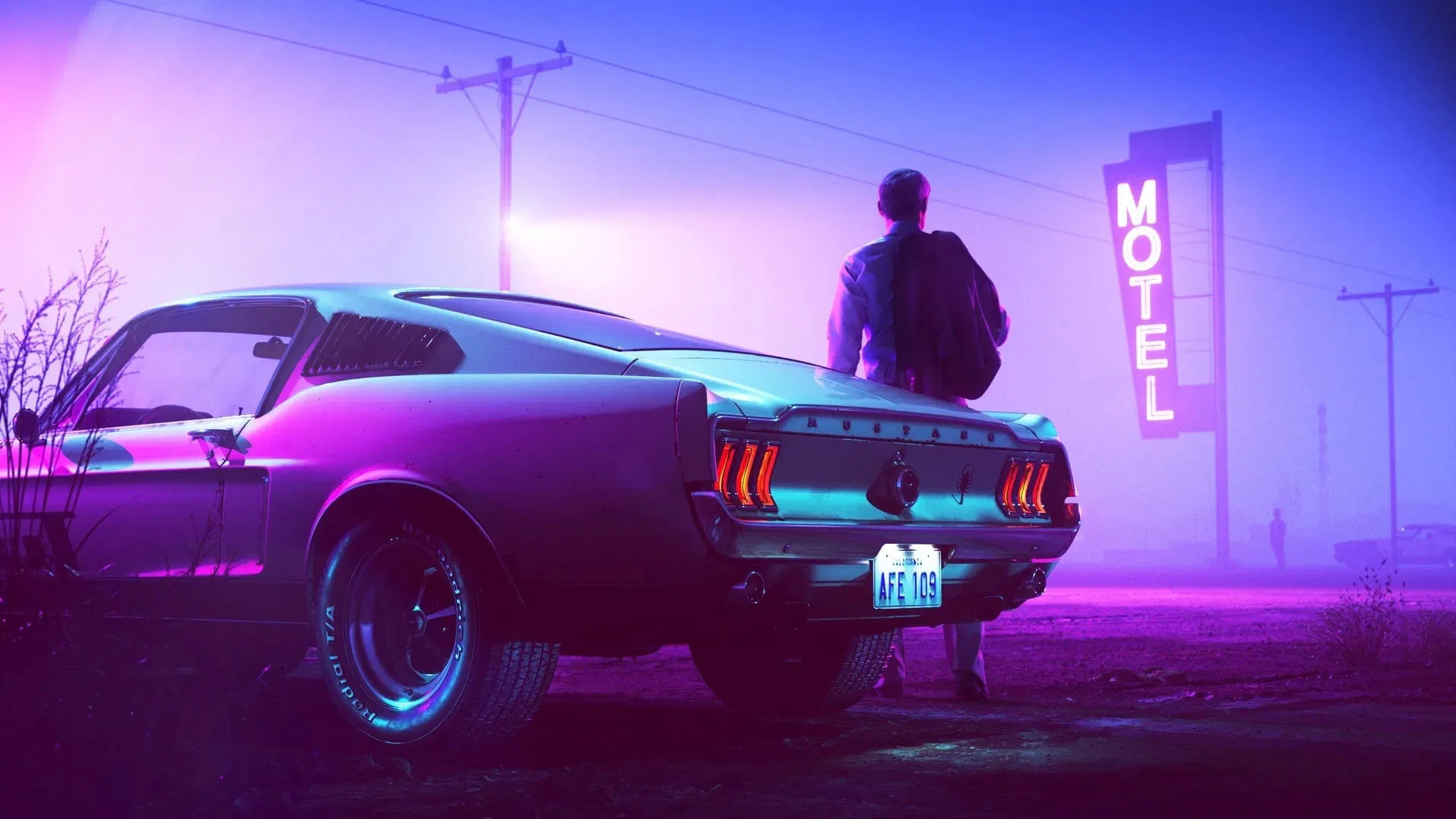
"I give you five minutes."
Drive is a film that would rather show you than tell you, and it commits to that choice so completely that it will genuinely frustrate some people. Nicolas Winding Refn directs with the patience of someone who has decided that atmosphere is an argument, and for most of the runtime he is right. The opening heist sets the register immediately. No theatrical chases, no dramatic speeches. Just a scanner, a window, and a driver who knows exactly how long he has. That restraint is the whole approach.
Ryan Gosling's performance is better than the memes suggest. He plays the Driver as something closer to a folk figure than a character, someone who exists more as principle than as person, and the film supports that choice by giving him almost no backstory. The five-minute rule. The scorpion jacket. The toothpick. These things work because they feel like a code, and codes are interesting when tested. Carey Mulligan plays Irene with a quiet warmth that earns most of the film's emotional stakes. Bryan Cranston as the Driver's manager and Oscar Isaac as Irene's husband are both fully drawn in limited screen time. Albert Brooks as the villain is the film's best surprise, playing menace through politeness in a way that is quietly more unsettling than anything the screenplay spells out. Ron Perlman as his partner fills out a crime world that feels specific and grounded rather than glamorised.
Refn shoots Los Angeles at night in pinks and blues and sodium yellow, giving the city a lo-fi, almost dreamlike quality that separates the film from the slick gloss of most crime thrillers. The stunts are practical and the action sequences are short, which makes them feel real. Two scenes do particular work. In the elevator, the Driver kisses Irene in a moment that folds tenderness and brutality into the same breath. Soft light, slow motion, then violence. The tonal whiplash is so precise it is almost musical. In the diner, a controlled conversation between the Driver and Nino cracks the film's cool surface just enough to reveal what is underneath.
The Cliff Martinez score deserves its own mention. It does not accompany the film. It tells you where you are emotionally when the characters are not going to. "Nightcall" over the opening credits sets the mood so precisely that the rest of the film is, in part, the score keeping that promise.
The problem is the distance. Refn is so committed to cool restraint that the film occasionally tips into self-satisfaction. Some scenes exist primarily to look good, and the middle section in particular suffers from a kind of decorative emptiness. The romance between the Driver and Irene is underdeveloped in a way that matters, because the final act asks you to feel the weight of what he does for someone he barely knows. If you have not been convinced that he cares about her, the film's ending costs less than it should.
The ending still works. No speech. No neat resolution. A body and a car sliding back into the stream of lights. It is spare and earned. Drive gets a 3.5 out of 5. The craft is precise and the performances are strong, but the commitment to surface occasionally costs it the emotional depth it is clearly reaching for. Beautiful film. Keeps you at arm's length. Whether that is a flaw depends on what you came for.
(Nobody who watched this film has ever listened to Nightcall the same way again.)