
Persona 5 Royal
The World Is a Prison Until It Isn't
JRPG ‧ Atlus ‧ PS4 ‧ 2020 ‧ 9 min read
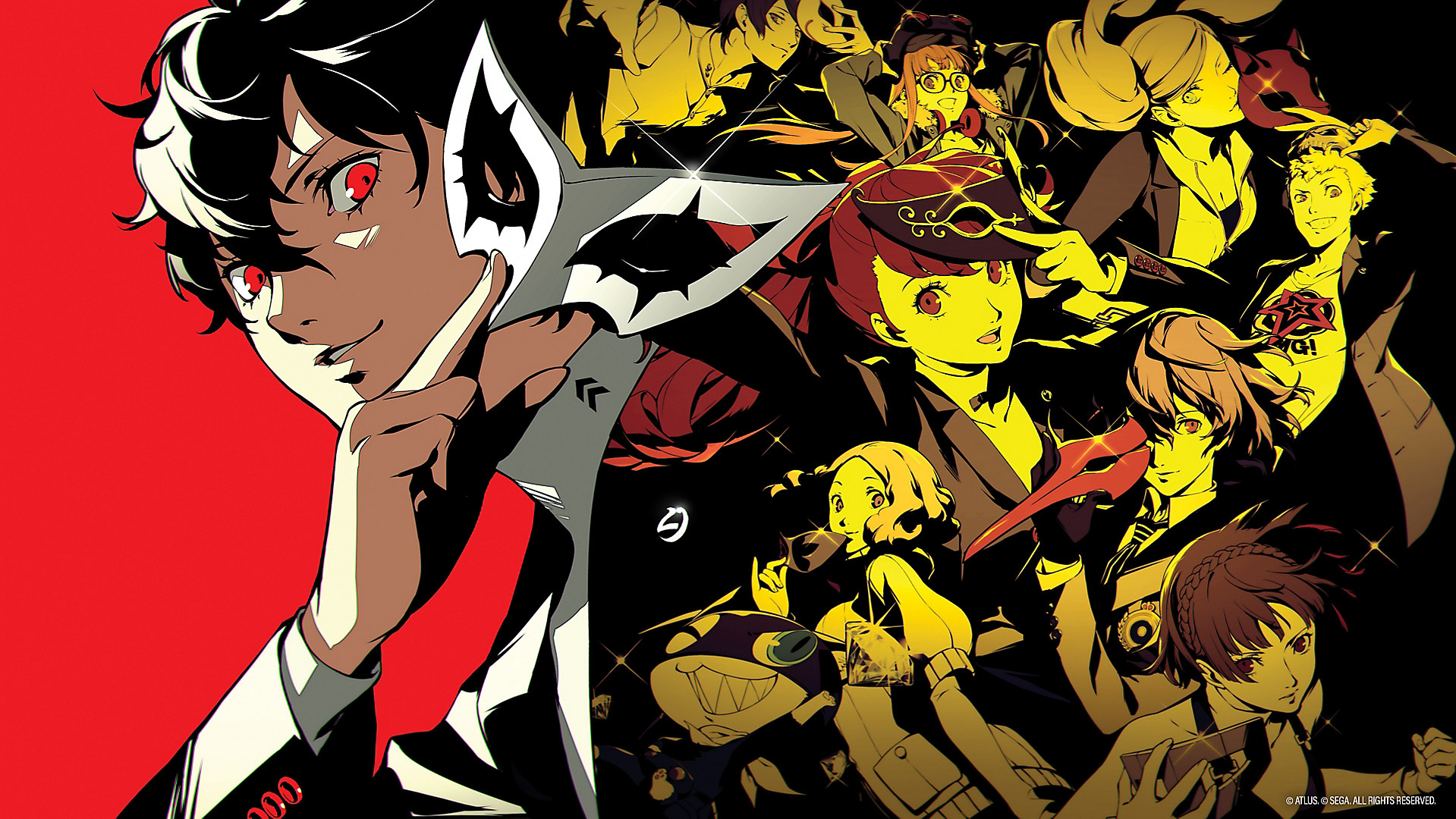
"I am thou, thou art I."
Persona 5 Royal opens with its main character already in handcuffs, sitting across a table from someone who has already decided who he is, and the game holds on that image long enough to make sure you understand what it is about before it lets you play. He is a high school student who has been transferred to a new school in Tokyo under the terms of a probationary sentence for a crime he did not commit, and the story begins with him already having been through something the game is not going to explain for another twenty hours. That kind of structural confidence is either going to work for you immediately or it is going to feel like a test, and it is worth knowing going in that Persona 5 Royal is a game that asks a great deal of patience before it gives you everything it has, but what it has, at its best, is genuinely extraordinary.
The game belongs to a genre called the JRPG, which stands for Japanese role-playing game and is a category that covers a lot of ground, but what it means here specifically is that you will be managing a party of characters in turn-based battles, leveling up through experience, and navigating a story that spans dozens of hours and has a lot to say about the society it is set in. The central mechanic that makes Persona 5 different from other games in its genre is the concept of Palaces, which are distorted mental spaces that exist inside the subconscious of corrupt adults, built from ego and the refusal to acknowledge wrongdoing, where the twisted version of a person's desires takes physical form. Your character and his group of friends, who call themselves the Phantom Thieves, enter these Palaces and steal the distorted desire at the core of each one, which forces the person in the real world to have a change of heart and confess. It is a creative premise for what amounts to a dungeon-crawling game, and more importantly it is a metaphor that the game actually commits to: every Palace is a specific story about a specific kind of corruption, and the best of them hit hard enough that the fantasy of being able to force accountability out of someone who would otherwise face none of it feels genuinely satisfying.
Before you ever get to a Palace, though, there is school, and this is where Persona 5 either wins you over or loses you. The game is structured around a calendar, and between Palace missions you attend class, answer quiz questions, spend time with friends, take part-time jobs, and manage a rotating set of social activities that improve your character's stats and deepen your relationships with the people around you. The Confidant system, which is what the game calls these relationship threads, is one of the best character-writing structures in the genre, giving each party member and major supporting character their own arc that unfolds through optional conversations spread across the full game, and the best of them land with real emotional weight that sneaks up on you through accumulation rather than any single dramatic moment. The problem is that the daily life structure also contains a lot of busywork: classroom quiz sessions that interrupt the flow without adding anything, time management decisions that start to feel like a second job, and a grinding social calendar that the game presents as meaningful choice but often feels more like obligation. If you are the kind of person who enjoys this level of structure, it will feel like richness. If you are not, it will feel like the game's primary obstacle to getting to the parts that are actually interesting.
The combat is turn-based and built around a system where hitting an enemy's elemental weakness knocks them down and grants you an extra turn, which you can then pass to another party member to chain together into longer sequences. It sounds simple, and in the early hours it is, but the depth comes from learning the weaknesses and resistances of each enemy type, managing your limited resources across a dungeon, and making use of the Persona fusion system, which lets you combine collected Personas into stronger ones and is the part of the game that rewards players who want to engage with the mechanics at a deeper level. The party itself is excellent in combat and even better in the conversations around it, with Ryuji, Ann, Yusuke, Makoto, Haru, and Morgana each having distinct combat roles and distinct personalities that play off each other in ways that make the group feel genuinely alive, and the group chat the game simulates between missions is often the most charming thing in any given session.
The style of Persona 5 is something that needs to be addressed on its own terms because it is doing real work, not just decoration. The menus are red and black and angular, sliding in with a confidence that borders on insolence, and every combat transition, every UI interaction, every screen wipe is designed to feel like a statement. Shoji Meguro's soundtrack, which mixes jazz, hip-hop, and rock in a way that should not cohere and completely does, is one of the best game soundtracks ever made, and tracks like "Last Surprise" and "Life Will Change" are so good that they become part of how you experience the moments they accompany. The style is not covering for anything weaker underneath. It is telling you something true about what the game is, which is a story about young people who feel trapped and powerless deciding to be neither of those things, and it commits to that attitude from the first frame to the last.
The honest criticism of Persona 5 Royal is that it is extremely long and not all of that length is earned. The fifth Palace, built around a corrupt CEO named Okumura, is widely regarded as the low point of the game and for good reason, because the dungeon design is the weakest in the game, the arc rushes its resolution in a way that feels like the writers ran out of interest before the player did, and the surrounding story beats slow to a crawl precisely when you want the game to be finding its second gear. There is also a stretch in the game's middle section where the momentum stalls and the game cycles through events that feel like maintenance rather than story, and if you are playing the original version of Persona 5 rather than Royal, that stretch is harder to push through. Royal exists, in significant part, to address this, and its most important addition comes in the third semester.
Takuto Maruki, a school counselor introduced in Royal's additional content, is the best villain the Persona series has produced and one of the best-written antagonists in gaming. What makes him work is that his ideology is not malicious, because he genuinely cares about the Phantom Thieves and about reducing suffering in the world, and the power he acquires gives him the ability to act on that care at enormous scale. The final confrontation with him asks you to reject something the game has spent a hundred hours making you want, and the moral weight of that moment is handled with enough care that it lands as a genuine dilemma rather than an obvious choice. It is the part of Persona 5 Royal that justifies playing Royal over the base game without reservation, and the boss fight that closes his arc is among the best in the game.
Persona 5 Royal earns a 4 out of 5, and the caveat that comes with that rating is an honest one: the game asks for a very large investment of time, some of which it repays fully and some of which it does not, and the Okumura arc in the middle is a genuine stumble that no amount of style can completely paper over. But the highs, which include the combat system at full depth, the party dynamic, the soundtrack, and everything Maruki adds in the final stretch, are high enough that the game earns its reputation anyway. Play Royal over the base game, and give it the time it needs to become what it is.
(Budget at least eighty hours. The game is not joking about its runtime.)