Batman v. Superman: Dawn of Justice
A graphic novelty
Action/Sci-fi ‧ 151 minutes ‧ PG-13 ‧ 2016 ‧ 6 min read
"No one stays good in this world."
Never have I seen a film so thoroughly undermine itself while trying so desperately to be important. Batman v. Superman: Dawn of Justice should have been a cultural event. In 2016, the hype surrounding this movie was unavoidable, and expectations were impossibly high. These were two of the most iconic characters in all of fiction, finally sharing the screen, and the anticipation felt generational. I still remember my dad taking my brother and me to the theater, the energy buzzing through the lobby, casually debating with a stranger about who would win the fight. This was supposed to be the superhero movie. Instead, it became one of the clearest examples of how ambition without discipline can collapse under its own weight.
Directed by Zack Snyder and starring Ben Affleck, Henry Cavill, Jesse Eisenberg, and Gal Godot this film is what happens when that division is embraced rather than corrected. Man of Steel was deeply flawed, but its first half showed a sincere interest in Superman’s psychology and moral uncertainty. It hinted at a version of the character struggling to become a symbol of hope in a hostile world. This sequel had the opportunity to refine that idea, to interrogate the consequences of Superman’s actions with clarity and purpose. Instead, it doubles down on the most controversial elements and discards whatever balance remained.
The result is a film that mistakes heaviness for depth and noise for meaning. It constantly gestures toward importance without earning it, stacking symbolism on top of speeches and mistaking volume for substance. The movie wants to be mythic, tragic, and profound, yet it is bloated and emotionally hollow. These characters are neither faithful to their comic counterparts nor strong enough reinventions to justify such drastic departures. The film insists that its ideas matter, but it refuses to do the character work required to make them resonate.
The story itself borders on nonsensical. Lex Luthor’s plan is needlessly convoluted and feels arbitrary, relying on coincidences and contrivances rather than logic or motivation. Instead of allowing Batman and Superman’s conflict to emerge naturally from opposing values, the film seems irritated that it has to justify the matchup at all. There is an odd hostility in the storytelling, as if the movie is mocking the audience for wanting a Batman versus Superman movie in the first place. What should feel like a tragic clash of ideals instead feels like an obligation being fulfilled with visible reluctance.
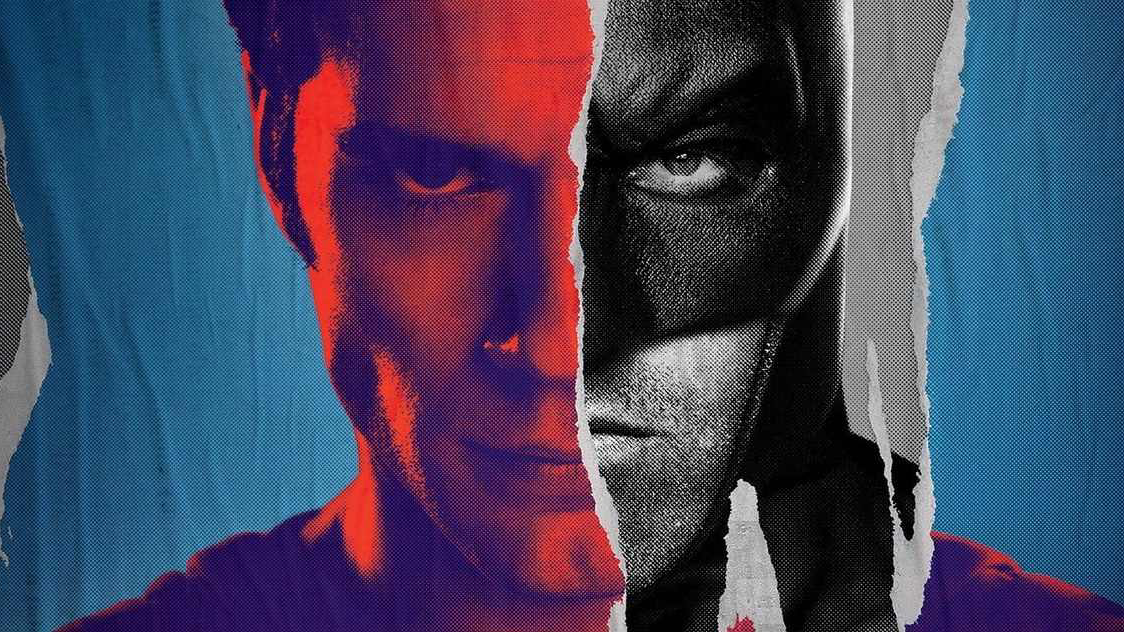
Visually, the film is undeniably striking, and this is where Zack Snyder’s strengths are most apparent. Nearly every frame is composed like a double-page splash panel, evoking the work of artists such as Alex Ross or Bryan Hitch. The imagery is grand, painterly, and meticulously arranged, often working far better as still images than as moving scenes. The sound design is solid, and Hans Zimmer’s Superman material remains effective, though much of the new music feels flat and forgettable by comparison. For a film that wants to feel operatic, the score rarely rises to meet the scale of the visuals.
The movie’s obsession with franchise-building only worsens its already fractured structure. Justice League elements are shoved into the narrative with no organic justification, interrupting pacing and bloating an already excessive runtime. By the time the film reaches its third act, any genuine narrative reason for Batman and Superman to fight has long since evaporated. The story drags itself forward out of obligation rather than momentum, and then Doomsday appears, not as a dramatic escalation, but as a checkbox to be ticked.
The decision to kill Superman here is the film’s most damaging mistake. In Man of Steel, Superman never truly completed a character arc, but there was at least the implication that one might follow. Dawn of Justice cuts that possibility off entirely. His death does not feel tragic or inevitable, but abrupt and wasteful. This version of the character has barely been allowed to exist, let alone grow, and removing him at this stage robs the story of any earned emotional payoff. It feels less like a culmination and more like abandonment.
Batman is similarly mishandled. We are introduced to him at the end of a moral descent we never witnessed, presented as a broken and brutal figure without the narrative history required to justify that transformation. Compounding the issue is the film’s disregard for one of Batman’s most fundamental principles: he does not kill. This is not a minor reinterpretation but a rejection of the character’s core identity. Time and again, the movie gives the impression that Snyder wanted to make a completely different story, then simply applied familiar names and costumes afterward.
Wonder Woman, while competently performed, is ultimately unnecessary. Her presence contributes little beyond franchise signaling and future setup. The film did not need an extended cut to fix its problems. It needed restraint, clarity, and a tighter focus on the story it was supposed to be telling. Cutting the runtime would not have solved everything, but it would have forced the film to prioritize substance over excess.
In the end, Batman v. Superman: Dawn of Justice takes the most divisive elements of Man of Steel and amplifies them, stripping away what little promise remained. It confuses darkness with maturity and spectacle with meaning. While it occasionally impresses on a purely visual level, those moments are doing all the work. The writing is unfocused, the character arcs are either rushed or nonexistent, and the emotional beats consistently fail to land. Even fans of Man of Steel are likely to walk away disappointed. For its visuals and isolated musical moments alone, the film earns a 1.5/5. As a sequel, a character study, and the long-awaited meeting of two legends, it stands as a profound waste of potential.
(Told you not to waste your time)