
Baahubali: The Beginning
Epic in Scale, Uneven on the Ground
Action/Drama ‧ 159 minutes ‧ NR ‧ 2015 ‧ 6 min read
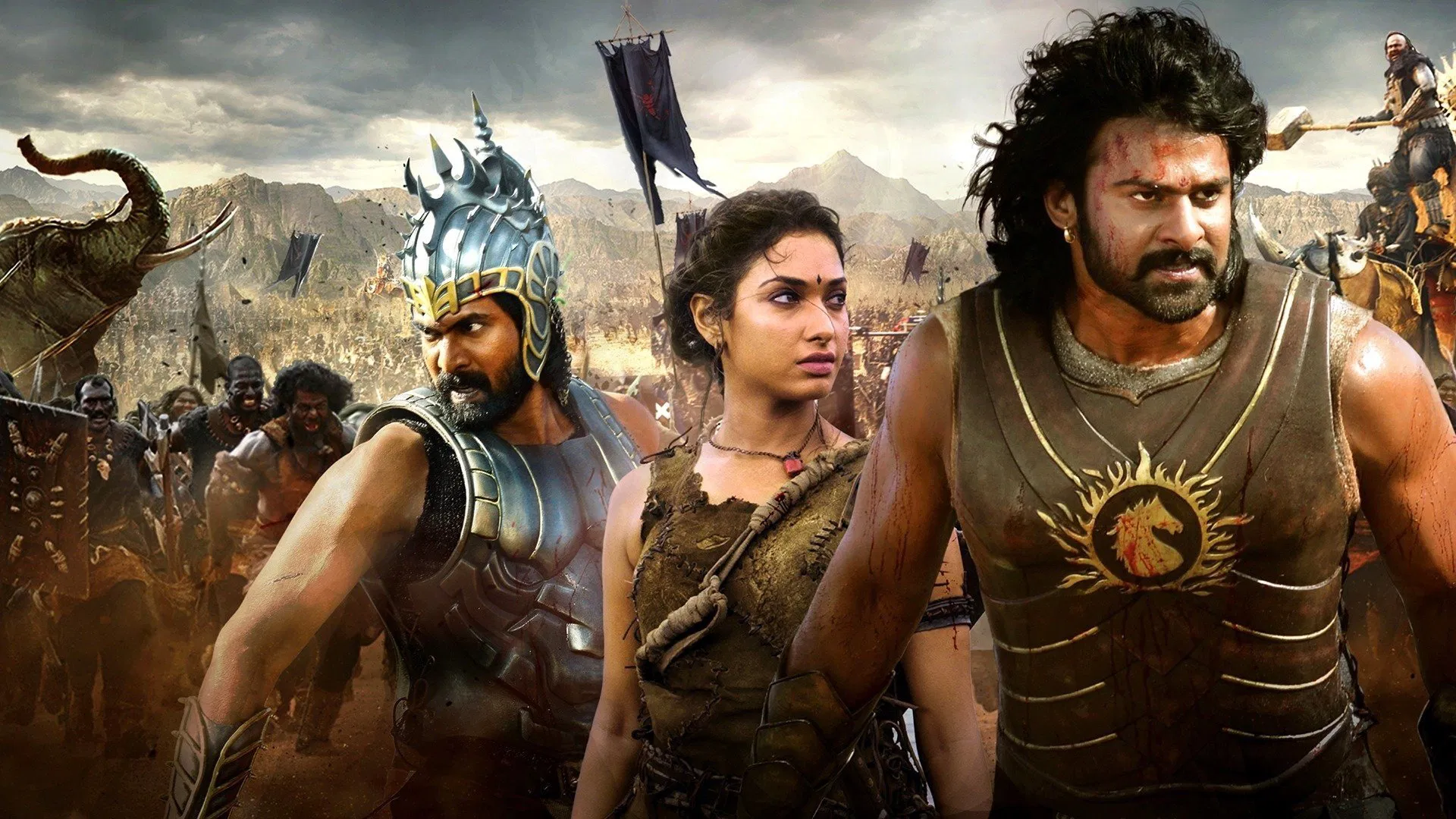
"An epic is not big. It is inevitable."
Baahubali: The Beginning is the kind of film that makes you wish it were slightly better than it is, because what it does well is genuinely impressive. S. S. Rajamouli directs with complete confidence in his own mythology, and that confidence is largely earned. The world feels permanent. The stakes feel real. When the film commits to its spectacle, there is almost nothing else in Indian cinema that matches it, and that includes films made with twice the budget.
The structure is essentially Hamlet. A rightful heir, a scheming court, a mother who guards the truth. That is not a complaint. Using a durable story as the spine frees Rajamouli to go as large as he wants visually while keeping the audience oriented. The archetypes carry weight because they are handled with complete sincerity. Nobody in this film is winking at the camera. The film believes in itself, and that belief is contagious.
Prabhas carries the dual role of Amarendra and Mahendra with physicality and a warmth that keeps the spectacle from feeling cold. The opening sequence, a baby passed through a waterfall by a dying woman, is exactly the kind of image Rajamouli builds myths from, and Prabhas makes the grown version of that child feel worthy of it. Rana Daggubati as the villain Bhallaladeva is the film's best casting decision. He does not play menace as theatrics but as entitlement, which is more frightening and more honest. Ramya Krishnan as Sivagami is the performance that holds the entire political structure together. She is the most powerful person in every scene she is in, and the film knows it.
M. M. Keeravani's score is the best thing about it. The music does not accompany the scenes. It drives them. Battle sequences gain urgency from the percussion. Emotional moments land harder because the melodies have been established long before the payoff arrives. K. K. Senthil Kumar's cinematography matches the ambition, framing cliffs and throne rooms with clean geometry that makes scale readable rather than overwhelming. The VFX holds up better than it should for an Indian production from 2015. The waterfall, the battle formations, the siege engines all have a physical coherence that a lot of modern blockbusters with bigger budgets fail to achieve.
Where the film stumbles is in its treatment of female characters and in its final act. Avantika is introduced as a focused, capable warrior and fades into a love interest without much transition. Devasena in the flashback sections is written with real fire, but she appears too late in the film to fully balance the earlier choices. The film often frames women as symbols first and people second, and while it gives them decisive moments, those moments feel like corrections rather than consistency.
The final battle is the other problem. It is technically accomplished and inventively staged, but it runs long. The sequence keeps topping itself past the point where the emotional curve can keep up. The choreography stays creative, but the impact flattens because there is simply too much of it. A leaner cut of the last thirty minutes would have made the film hit harder at exactly the moment it should be hitting hardest.
The mid-film flashback is the strongest section by a distance. It reframes loyalties and gives the political conflict actual weight. The film gets measurably better once the past is in view, which is both a structural compliment and a mild criticism. Baahubali: The Beginning gets a 3.5 out of 5. The ambition is real, the craft is serious, and the foundation holds. Part 2 answers the big question. Part 1 asks it better.
(The cliffhanger ending is still one of the most effective in recent memory.)