
Spider-Man 3
Too much movie
Action/Sci-fi ‧ 139 minutes ‧ PG-13 ‧ 2007 ‧ 6 min read
"We always have a choice"
Spider-Man 3 is the movie in this trilogy that I have changed my mind on the most. I used to be much more forgiving toward it. I could see the good ideas, the big action scenes, the performances, and the fact that there is a decent ending buried somewhere in here. I still see all of that. I just do not think it is enough anymore. Watching it after Spider-Man and Spider-Man 2 makes the problem pretty obvious. Those movies know what Peter's story is. Spider-Man 3 keeps changing its mind.
The first movie is about Peter learning what responsibility means. The second is about what that responsibility costs him. The third should have been about bringing those ideas together. Instead, the movie gives Peter a black suit, Harry's revenge story, Sandman, Eddie Brock, Venom, Gwen Stacy, Peter and MJ's relationship problems, and a story about forgiveness. None of those ideas are automatically bad. The problem is that there is simply too much of them.
Harry is probably the biggest missed opportunity. Spider-Man 1 and Spider-Man 2 spend two movies building him into one of the most important people in Peter's life. His father is dead, he blames Spider-Man, and his friendship with Peter is slowly getting worse. That should have been the emotional center of the third movie. Instead, Harry's feelings keep changing depending on what the next part of the story needs him to do.
He wants revenge. Then he wants Peter's friendship. Then he helps Peter. Then he remembers that he hates Peter. Then he helps him again. Eventually he forgives Peter, which is supposed to be one of the biggest emotional moments in the trilogy. The idea is fine. I just wish the movie had actually built toward it instead of repeatedly resetting Harry before the finale.
Peter and MJ are not much better. Their relationship should be one of the things the trilogy has been building toward since the first movie, but Spider-Man 3 keeps piling misunderstandings on top of them. Peter is becoming more arrogant. MJ is unhappy. Harry is involved. Gwen gets pulled into the middle. Then the black suit makes everything worse. There are some good scenes in there, but the movie keeps forcing the relationship into another conflict before the last one has had time to settle.
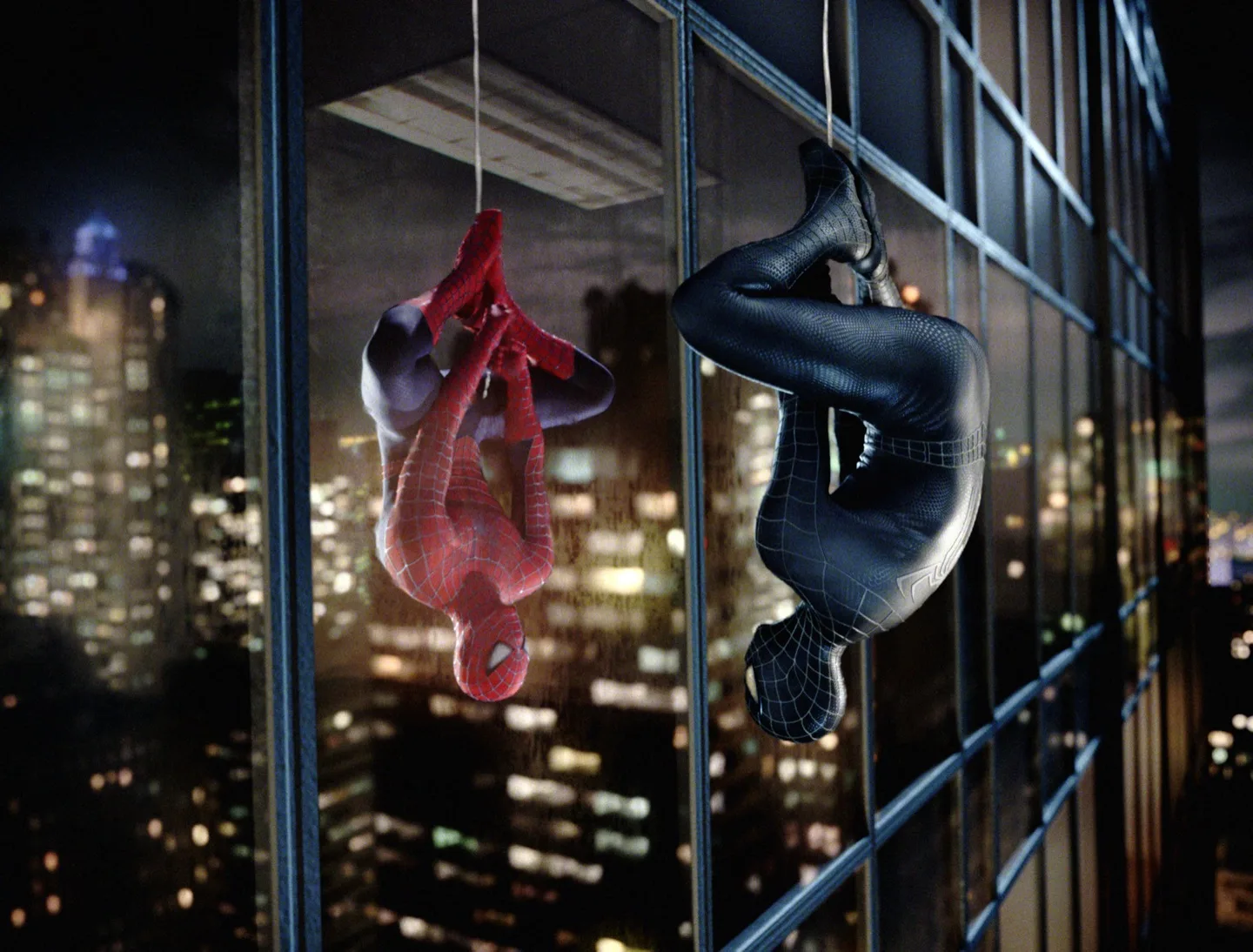
The black suit itself is one of the movie's better ideas. Peter getting a version of himself that has no problem acting on his anger could have been a really good continuation of what the first two movies established. Peter has spent his entire life trying to control himself and do the right thing. What happens when he stops caring about that? That is a good Spider-Man story.
The problem is that the movie rushes it. Peter does not slowly become worse. He mostly becomes weird. There is nothing wrong with making Peter embarrassing or funny when he has the black suit. The problem is that the movie wants both a serious story about Peter's darker side and a comedy routine about him walking down the street with an exaggerated haircut. It never really decides which one it wants to be.
Venom is where the movie completely loses me. Eddie Brock is not a terrible character by himself, but he feels like an extra assignment the movie was given. Venom is supposed to be one of Spider-Man's most personal enemies, but there is not enough time to make that relationship matter. Eddie does not have the history with Peter that Norman or Otto have. He arrives, gets jealous, gets the symbiote, and suddenly we are expected to see him as the final threat.
The Sandman storyline is much better. Flint Marko being motivated by his daughter gives the movie a real emotional story, and Thomas Haden Church does a good job with it. Some of the best moments in Spider-Man 3 involve him. The problem is that his story is sharing this movie with everything else. Just when it starts becoming interesting, the movie has to jump back to Harry or Peter or Eddie.
That is basically the whole problem with Spider-Man 3. There is always another thing to get to. The movie has scenes I genuinely like, but they are constantly surrounded by other scenes fighting for attention. It is almost impossible to stay with one emotional thread for very long.
The movie at least still looks good. Raimi's action direction is strong, the effects can still be impressive, and there are some really memorable visual moments. The Sandman sequence where Flint first comes together is beautiful. The final battle has energy. The black suit looks great. This is not a movie where I think everybody stopped caring about the filmmaking. There is clearly a lot of talent on screen.
The problem is that Spider-Man 2 already showed how good this team could be when everything was focused. That movie had a lot going on, but all of it fed into Peter's story. Spider-Man 3 keeps introducing new ideas without giving them enough room. It is not that the movie needed to be shorter. It needed to pick what mattered most.
I also think the movie gets judged differently now because people have had more time to become nostalgic for it. I understand why. It has funny scenes, good action, a great score, and a lot of the Raimi personality that people miss. I even think some of the criticism of individual moments has gone too far. But liking parts of Spider-Man 3 does not mean the movie itself is secretly misunderstood.
The biggest frustration is that you can see the movie it could have been. Harry's story could have been the entire third act. Peter's struggle with the black suit could have been darker and more gradual. Sandman could have been the main villain while Harry was the personal conflict. Peter and MJ could have been given more time to actually deal with everything that has happened to them. There was a good ending here. There are just too many other movies fighting it for space.
That is also why the 2.5/5 feels right to me now. I do not hate Spider-Man 3. There is too much good stuff here for me to call it a complete failure. But I also cannot look at it and pretend it successfully finishes what the first two movies started. Spider-Man 1 has a clear beginning. Spider-Man 2 has a clear middle. Spider-Man 3 feels like several endings trying to happen at the same time.
Spider-Man 3 gets a 2.5/5. I still like parts of it. I still think Raimi's filmmaking is good. I still like Sandman. I still think Harry's final moment with Peter works. But the movie is stretched in every direction at once, and that hurts almost everything it is trying to do. It is a frustrating ending to a trilogy that deserved something more focused.
(Somewhere in here is a great Spider-Man movie. It just has to share the screen with about four other ones.)