
Spider-Man 2
The better movie, not my favorite
Action/Sci-fi ‧ 135 minutes ‧ PG-13 ‧ 2004 ‧ 6 min read
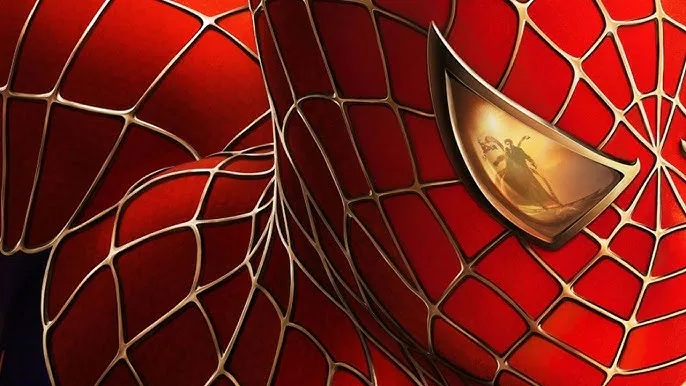
"I believe there's a hero in all of us"
Spider-Man 2 is one of those movies where I completely understand why everyone loves it, and I agree with most of them. This is a better made movie than Spider-Man. The effects are better, the action is better, the cinematography is better, and the whole thing feels more confident. But Spider-Man is still my favorite. I know that sounds like I am splitting hairs, but I think there is a real difference between the movie I think is better and the movie I personally love more.
Spider-Man 1 is about Peter becoming Spider-Man. Spider-Man 2 is about Peter figuring out whether he can actually keep being Spider-Man. That is a much more difficult problem than getting the powers in the first place. Peter has school, work, rent, Aunt May, Harry, and Mary Jane, and somehow he is also supposed to spend his nights fighting criminals. There is only so much of himself he can give to everybody else.
That is what makes Peter's life in this movie so relatable. He is not dealing with some huge superhero problem most of the time. He is late. He is broke. He is behind in school. He loses his job. He misses important moments with MJ. He disappoints Aunt May. He keeps making promises that he cannot keep because there simply is not enough time. Being Spider-Man is starting to cost him his actual life.
Tobey Maguire plays that exhaustion really well. Peter is quieter in this movie than he is in the first, but that works because he has more weighing on him. When he decides to give up Spider-Man, I buy it. It does not feel like the movie suddenly made him selfish. It feels like somebody who has spent years trying to do everything finally admitting that he cannot do it anymore.
Doctor Octopus is a great villain for that story. Alfred Molina makes Otto easy to care about before everything goes wrong, and that makes his transformation much sadder. The mechanical arms are also incredible. They give the movie some of its best action because Spider-Man is fighting something that can attack him from basically anywhere. Doc Ock is definitely the better physical villain compared to Norman Osborn. The train fight alone is enough to make that argument.
At the same time, I still prefer Norman Osborn as a written villain. Norman is more directly tied into Peter's life and especially Harry's. His story feels like it grows naturally out of what Spider-Man 1 set up. Otto's story is tragic and more sympathetic, but Norman has a more complicated connection to the people around Peter. That makes him the villain I find more interesting even though Doc Ock is much more fun to watch fight Spider-Man.
The supporting cast is also really good here. Harry is still angry about his father and even more convinced that Spider-Man is responsible for destroying his life. Mary Jane feels more like her own person this time, and I like that her frustration with Peter comes from the fact that she actually wants him to let her into his life. Aunt May gets some of my favorite scenes because Rosemary Harris makes her feel like a real person instead of simply the character who exists to give Peter advice.
The train sequence is probably the best example of why this movie has the reputation it does. It is just a fantastic action scene. The effects still work, the movement has weight, and Raimi lets you understand exactly what Peter is trying to do. He is not fighting because he wants to win some superhero showdown. He is trying to stop a train full of people from dying. That makes the whole thing feel more important.
I also love how often Spider-Man 2 lets Peter just exist without the suit. The elevator scene is funny. Peter's conversations with Aunt May are emotional. His awkwardness with MJ is believable. Even the little moments where he is trying to get through New York while being late for something make the movie feel grounded. It is a superhero movie, but it keeps remembering that Peter still has to live the rest of his life.
The visual improvement over Spider-Man 1 is obvious. The swinging looks smoother, Spider-Man moves more naturally, and the city feels larger without losing its personality. Raimi has more money and more experience this time, and you can see exactly where it went. The first movie had to prove that Spider-Man could work on screen. The sequel gets to focus on making him look great.
The movie also gets a lot out of its musical score. Danny Elfman's themes still sound like Spider-Man, but the score feels bigger this time. The music helps sell Peter's victories, his failures, and the moments where he finally decides what he wants. It is one of those scores where you can hear the movie's emotional direction before anyone says anything.
What keeps me from giving Spider-Man 2 a 5/5 is honestly more about Spider-Man 1 than Spider-Man 2 itself. I do not have some major problem that brings this down. I just connect with the first one more. I like the origin story. I like Norman more as a villain. I like the feeling of discovering Peter's world for the first time. Spider-Man 2 is more accomplished, but Spider-Man has more personal meaning to me.
I think that is also why Spider-Man 2 works so well as the second part of the trilogy. The first movie asks what Peter will do with his powers. This one asks whether he can keep making the sacrifices required to use them responsibly. Spider-Man 3 was supposed to be the next step after that, and looking at these movies together makes it frustrating how much potential that third movie had.
Spider-Man 2 gets a 4.5/5 from me. It is the stronger movie in a lot of measurable ways. The filmmaking is better, the action is better, the effects are better, and Doctor Octopus is the better physical villain. I just do not love it quite as much as Spider-Man. The first movie made me care about Peter Parker. The second one makes me understand what being Peter Parker actually costs.
(Still not my favorite. Just annoyingly close.)